Waiting On Advent, Isaiah 2, Matthew 24, Romans 13

As we enter this time of Advent, we are reminded that we are called to wait on Christ during this season. We are to turn with repentant hearts toward preparing for his coming at Christmas, in the future, and even now through Word and Sacrament. Christ comes to us continually to make us ready to receive him and celebrate his birth and to continue to await his return when he brings about the resurrection of the dead.

Image: Combination of images taken from Wikipedia, all in the public domain. They can be found at the following links:

https://commons.wikimedia.org/wiki/File:Simon_ushakov_last_supper_1685.jpg
https://commons.wikimedia.org/wiki/File:Apocalypse_-_BL_Add_MS_35166_f023v.jpg
https://commons.wikimedia.org/wiki/File:1797,_West,_Benjamin,_The_Woman_Clothed_with_the_Sun_Fleeth_from_the_Persecution_of_the_Dragon.png

Where History is Headed, Matthew 25.31-46

In this picture of the Last Judgment, Jesus speaks to those who served him in the least of his brothers and those who didn’t. What does this reveal about judgment? What does this reveal about how closely we identify with Jesus?

Image: Last Judgment (Ravenna), photo by Jim Forest, no changes made, CC BY-NC-ND 2.0. Image location: https://www.flickr.com/photos/jimforest/6052391843

Future Hope for Present Change, Luke 21:5-19

Jesus speaks of wars, tumults, earthquakes, and diseases as well as persecutions for his followers. All of these things are what has been taking place since his death and resurrection throughout the world around us. What are we to make of that? How should we live in the midst of these things around us? What is our anchor into the future renewal of all things and how does knowing of the future return of Jesus and the resurrection affect us in the here and now?

Image: A bear has overturned a beehive and is attacked by bees, etching by J. Kirk after F.Barlow for a fable by Aesop, public domain. Image Location: https://wellcomecollection.org/works/b43wpm8n/images?id=aa6gc5ct

Heavenly Minded for the Resurrection, Luke 20:27-38

Jesus is asked an absurd question by the Sadducees about the resurrection. Instead of answering their question, he redirects them because they have a false understanding of what the resurrection is actually like. When we don’t understand the reality of continuity and discontinuity of the resurrected and glorified state, we miss the opportunity to grow in our faith and grow in the virtuous life we have been called to through the transforming work of Jesus in us.

Image: Death and Ascension of Saint Francis, Giotto, photo by Frans Vandewalle, license: CC BY-NC 2.0 (no changes made). Image location: https://www.flickr.com/photos/snarfel/5189845942/in/photostream/

Belonging to God as a Saint, Revelation 7, Ephesians 1

All Saints’ Day is an old feast day within the Church. It hasn’t always been on November 1, but that is where it has been for 1300 years now. Why do we celebrate such a day? Why remember the saints and commemorate the work of those long dead? It’s because they are not truly dead, but live in Christ awaiting the resurrection! The works they did, whether known or unknown, are works that have paved the way for us today to be saints. So we remember them because without them, we wouldn’t be here.

Image: Neznani slikar, Public domain, via Wikimedia Commons
A Pharisee, a Tax Collector, and the Atonement, Luke 18:9-14

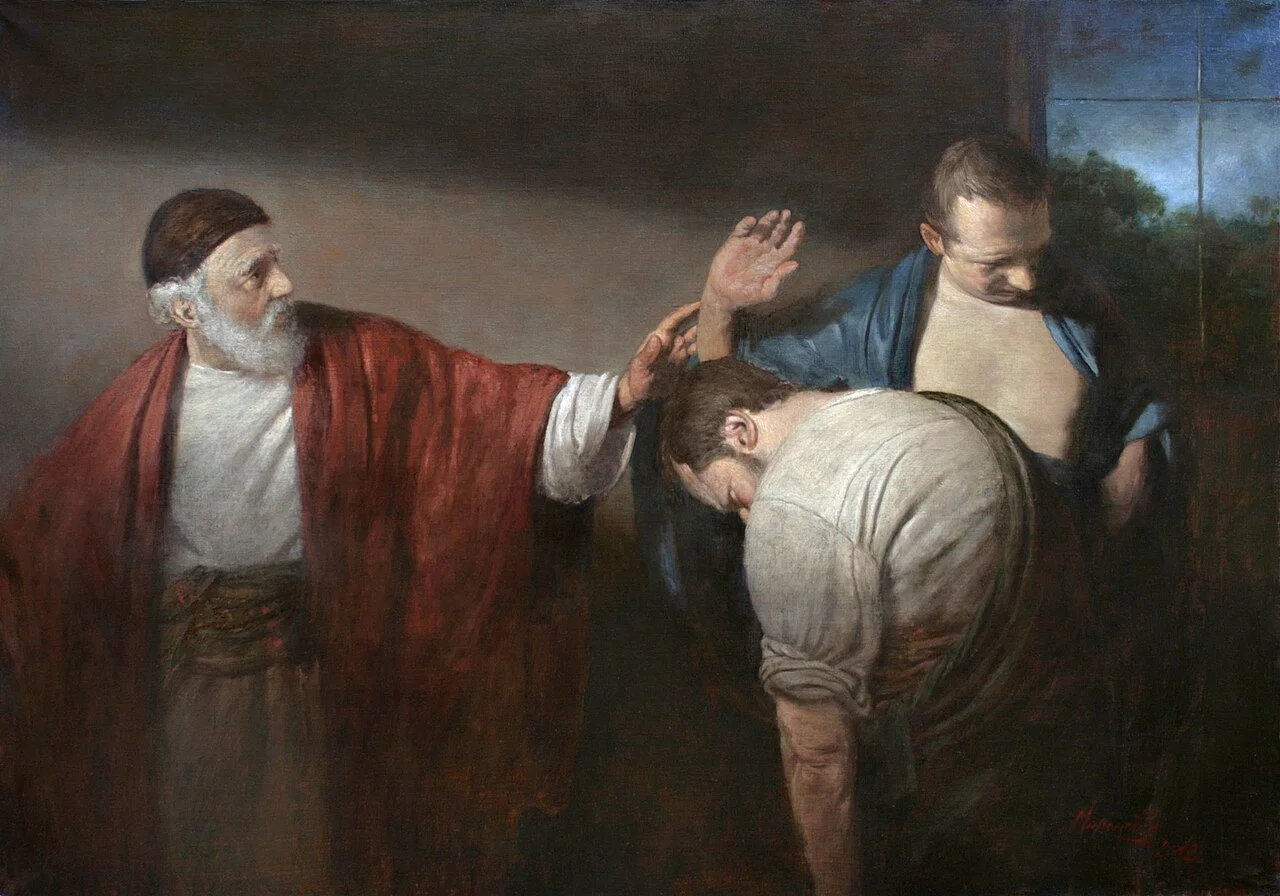
When Jesus told the parable of the Pharisee and Tax Collector, there was a great deal packed into it. The Pharisee was certainly believing in his own righteousness, but what does the tax collector mean when he asks for mercy? When we ask for mercy, we aren’t merely asking God to overlook our sins, we are asking for an atonement that will truly cover over our misdeeds and enable us to be in his presence forever.

Image: The wub, CC0, via Wikimedia Commons.

The Heel-Grabber, the Widow, and the Slumberless God Who Blesses, Genesis 32, Luke 18:1-18

Jacob wrestles with God. The Widow wrestles for justice. The slumberless God seeks to bring blessings to his people. This is the reality that we are confronted with in our various texts this Sunday. How do we wrestle with them and be drawn near to a God through our own prayers?

Image: Illustrators of the 1897 Bible Pictures and What They Teach Us by Charles Foster, Public domain, via Wikimedia Commons

Faith for Prayer, Obedience, and Thanksgiving, Luke 17:11-19

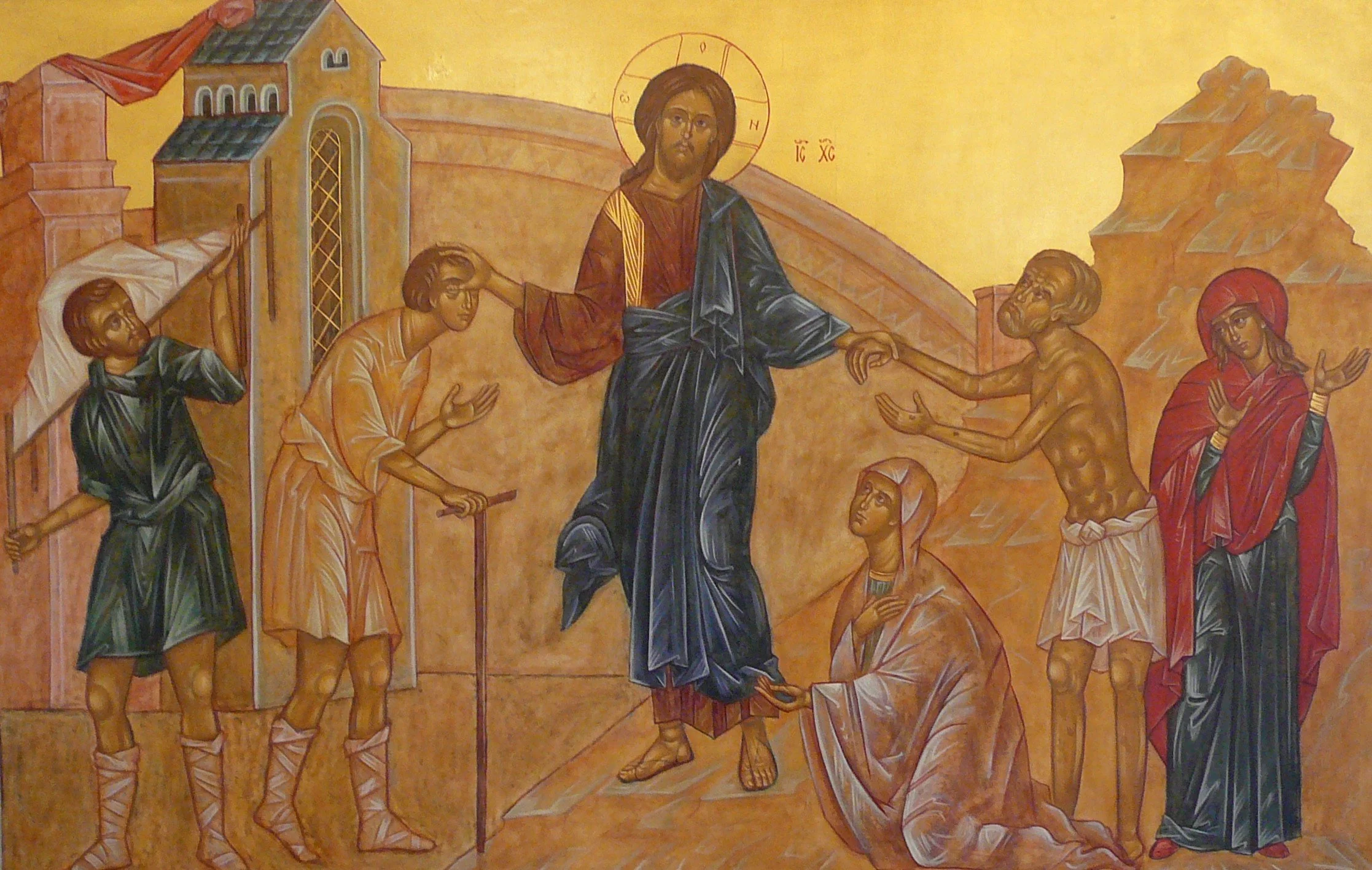
Jesus’ healing of the 10 lepers is an amazing moment that leads us to reflect on sickness of soul that we have and how he calls forth trust in his work for us. When we pray in faith, he calls us forward into the world to do his will, leading us to turn back and give thanks for his healing hand upon us.

Image: Gebhard Fugel, Public domain, via Wikimedia Commons. Image location: https://commons.wikimedia.org/wiki/File:Gebhard_Fugel_Christus_und_die_Auss%C3%A4tzigen_c1920.jpg

The Beam of Light of Faith, Luke 17.5-10

As Jesus is teaching his apostles, they cry out for an increase in faith. What causes such a prayer to come from their lips? How does one actually find an increase of faith? How does humility and love of God undergird this increase? Father Jeremiah considers all of this as he turns our eyes from analyzing what our faith looks like to simply looking along the beam of light God has given us in Jesus Christ.

Image: 06-05-11 - Beams of Light, taken by Lynda Giddens License: CC BY-NC-SA 2.0 (No changes made), Image Location: https://www.flickr.com/photos/s_v_p/5806065837/

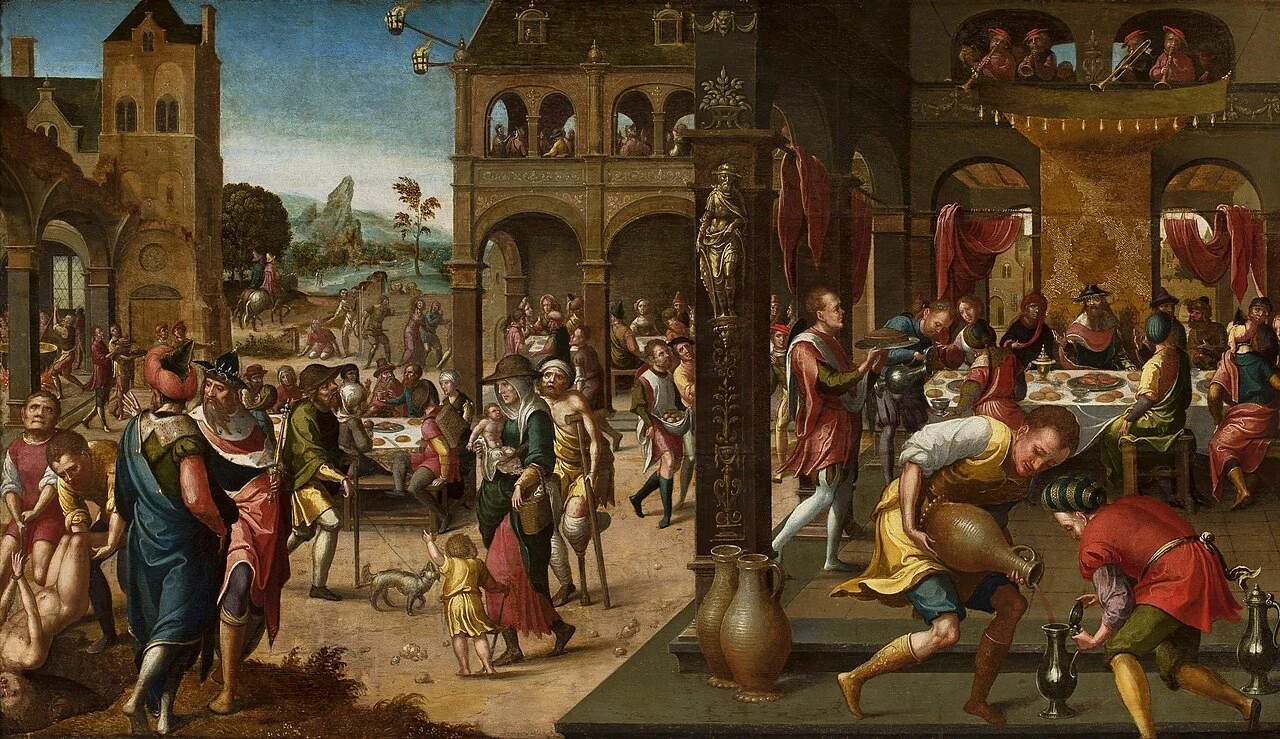
The Rich, the Poor, and Baptism for All, Luke 16:19-31

Jesus tells the unique parable about Lazarus and the rich man and this life and the afterlife are full of contrasts. The contrasts that exist are founded upon faith and trust in God’s promises to us through Jesus Christ. We encounter these promises in baptism and receive the through faith in Jesus Christ.

Image: Lazarus at the Rich Man's Gate, by Heinrich Aldegrever, Public Domain. Image Location: https://www.metmuseum.org/art/collection/search/354610

A Blessed Future Begins with Trust Now, Luke 16:1-13

The parable of the Unjust Steward in Luke 16 has given many people trouble over the years. It has the appearance of approving of the unrighteous actions of the steward. Yet, what is the shrewdness he is praised for? Father Jeremiah directs us to see that shrewdness is betting everything on the Master’s generosity and mercy while seeking new homes to live in.

Image: Phillip Medhurst, FAL, via Wikimedia Commons. Image location: https://commons.wikimedia.org/wiki/File:Teachings_of_Jesus_31_of_40._parable_of_the_unjust_steward._Jan_Luyken_etching._Bowyer_Bible.gif

Burden of Lostness Lifted, Luke 15:1-10

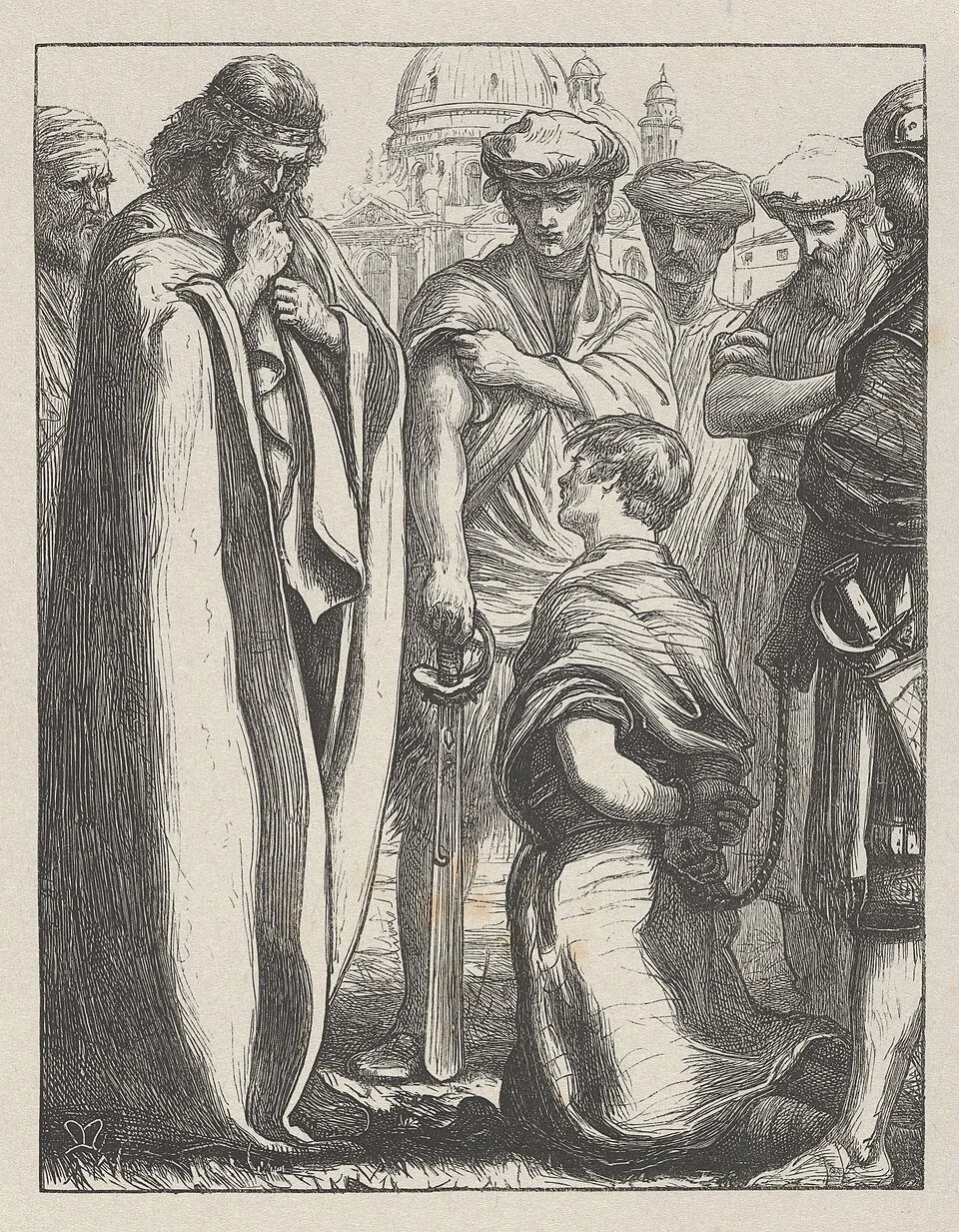
The parables of the Lost Sheep and the Lost Coin in the Gospel of Luke are of great importance. Not only do they introduce the parable of the Prodigal Son, but they remind us that they Pharisees had lost the people of God by adding layers of law to God’s word. Jesus cuts through the man-made laws of the Pharisees and comes to seek that which was lost in order to bear it into the Kingdom of God.

Image: The Lost Sheep (The Parables of Our Lord and Saviour Jesus Christ), after Sir John Everett Millais, engraved and printed by Dalziel Brothers. Public domain. Image location: https://www.metmuseum.org/art/collection/search/382277

Impossible Discipleship, Luke 14:25-33

It is easy for us to reduce Jesus’ call to discipleship to a mere way of following him. The reality is that the discipleship that Jesus demands of us is one that will lead to our deaths! His call is one that is utterly beyond our abilities. He wants to us realize our complete need for his grace and his death so that we can be enabled to walk the path before each of us.

Image: Christ Carrying the Cross, Titian, Public domain, via Wikimedia Commons.

Receiving Honor through Humility, Luke 14:1, 7-14

Jesus taught a group of people about honor and shame and humility in today’s Gospel lesson from Luke 14. He saw guests vying for better seats of honor and told them a parable about what happens when you claim honor that you do not have. Instead, one should pursue humility and the lowest place that you can be exalted in the eyes of all.

Image: Picture taken by Mark Freeth, license CC BY 2.0, cropped. Image location: https://pxhere.com/en/photo/326821

From Law to Baptism and Faith, Galatians 3:23-29

In writing to the Galatians, St. Paul reminds the that the law itself is a harsh prison and disciplinarian. To live by that way is to find only death and condemnation. However, to recognize that the law is meant to reveal sin means that they can cling to Christ by faith through baptism. Baptism becomes that foundation upon which we can trust that God is at work in us.

Image: Baptism Shell, posted by WELS.net. No changes made, CC BY-NC 2.0. Image location: https://www.flickr.com/photos/welsnet/3404685668/in/photostream/

Salvation in the Trinity, John 16:5-15

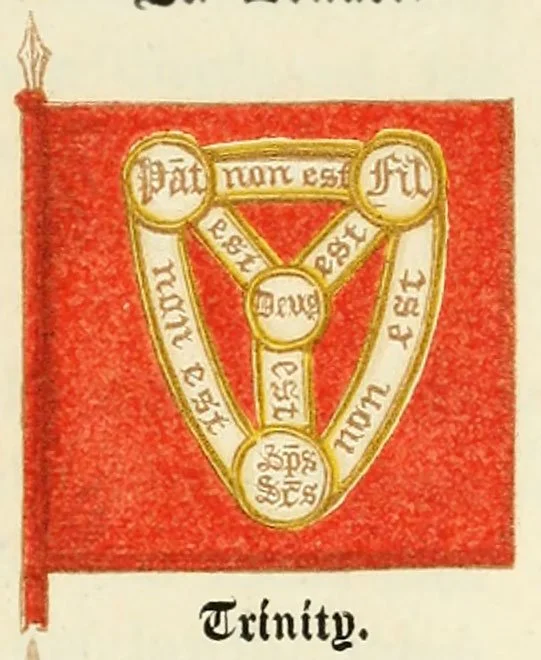
The Trinity is one of the most important doctrines in our understanding of God. The purpose of the doctrine is to enable us to better understand the relation between the Father, the Son, and the Holy Spirit. The nature of God revealed to us reminds us that salvation is dependent upon all three persons being truly God, but being only one God. If God is only a singular person, salvation falls apart biblically. Salvation in Jesus Christ reveals to us that God is Father, Son, and Holy Spirit, three persons, but one being.

Image: Eugenio Hansen, OFS, CC BY-SA 3.0 <https://creativecommons.org/licenses/by-sa/3.0>, via Wikimedia Commons. Image cropped to make into a square.

The Gift of the Holy Spirit, Acts 2:1-21, 1 Corinthians 12:4-13

On the first day of Pentecost, the Holy Spirit swept down upon the Apostles, empowering them to share the good news of Jesus Christ raised from the dead for the forgiveness of sins. Who is this Spirit? What is he doing? And why does he come down upon the Apostles and all those who believe in Jesus? Harrison Northey answers these questions and leads us to know the Holy Spirit more deeply.

Image: Veni, Dator Munerum, phtoto by Lawrence OP, licensed under CC BY-NC-ND 2.0. Image location: https://www.flickr.com/photos/paullew/5807014763/in/photostream/

Love Begetting Love, John 13:31-35

On the night that Jesus was betrayed, he told his disciples that he was going to be glorified, that they could not go where he was going, and that they were to love one another just as he had loved them, all in quick succession. What does he mean by all of this? How does this help us walk in the faith he has betwoed upon us? Are we capable to receive such things?

Image: Carl Bloch, Public domain, via Wikimedia Commons Location: https://commons.wikimedia.org/wiki/File:Bloch-SermonOnTheMount.jpg